Unanimous Supreme Court rules that no-fly case can go forward
In a unanimous 9-0 decision announced today, the US Supreme Court has ruled that a lawsuit brought by Yonas Fikre challenging the US government’s placing him on its no-fly list can go forward even though the government has, for the time being (and only after he sued), taken him off its travel blacklist.
Mr. Fikre is a US citizen who was put on the US government’s “no-fly” list while he was traveling overseas, in order to pressure him to become an informer working for the FBI to spy on members of a mosque he had attended back home in Portland, OR. As a result of being unable to return to the US, he was eventually arrested (at the behind-the-scenes instigation of the US, he plausibly claims) for overstaying his visa, tortured and further interrogated (also at the behest of the US, he claims, also plausibly), and again told he could be removed from the no-fly list — and thus allowed to be released from immigration detention and deported to the US — if he became an FBI informer.
The Supreme Court’s unanimous decision is narrow but important. The government has never, so far as we can tell, actually tried to defend any of its no-fly decisions and orders in court. Instead, the government has tried to avoid judicial review of either its decision-making procedures (as the Supreme Court notes in its opinion today, “no statute or publicly promulgated regulation describes the standards the government employs when adding individuals to, or removing them from, the list”) or the substantive outcomes (a striking pattern, publicly-revealed when the list was leaked, of anti-Muslim bigotry).
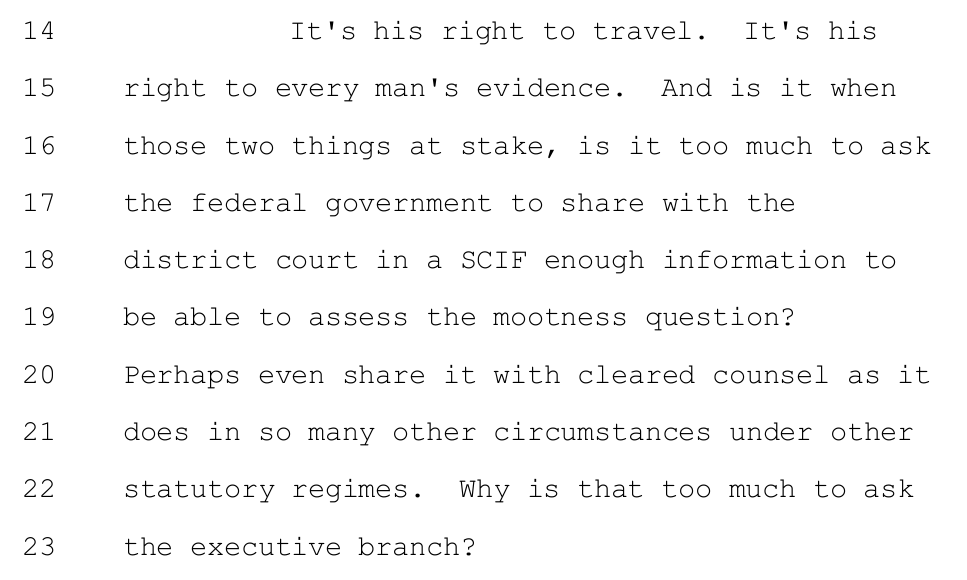
The government’s two-prong strategy for avoiding judicial review has been to argue that the evidentiary basis (if any) for no-fly decisions is a state secret that can’t be disclosed even to judges, much less the subjects of no-fly orders, and to try to render the remaining cases “moot” by taking those who lawyer up and sue off the blacklist before their cases can come to trial, as it did with Mr. Fikre once he was back in the US.
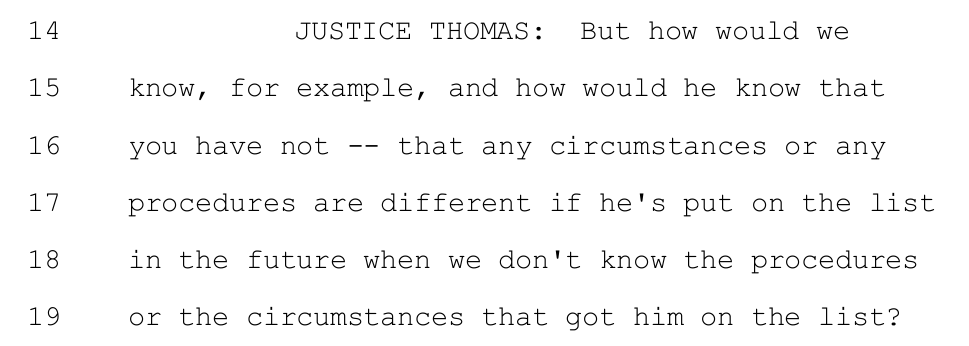
The Supreme Court’s decision today deals solely with the “mootness” issue. So little has been revealed about the government’s actions in putting Mr. Fikre on, and later off, the no-fly list that there is no basis for confidence that the government actions that he complained of in his lawsuit won’t recur if the case is dismissed.
The unanimous opinion, written by Justice Gorsuch, didn’t reach the question of classified or “privileged” information or “state secrets”. Those issues remain to be addressed as the case proceeds on remand in the U.S. District Court for the District of Oregon. Justice Alito, joined by Justice Kavanaugh, filed a concurring opinion agreeing with the judgment that the case was not moot, but stressing that they “do not understand the Court’s opinion to require the Government to disclose classified information as a matter of course” and that it might be possible to decide the case on the basis of unclassified evidence.
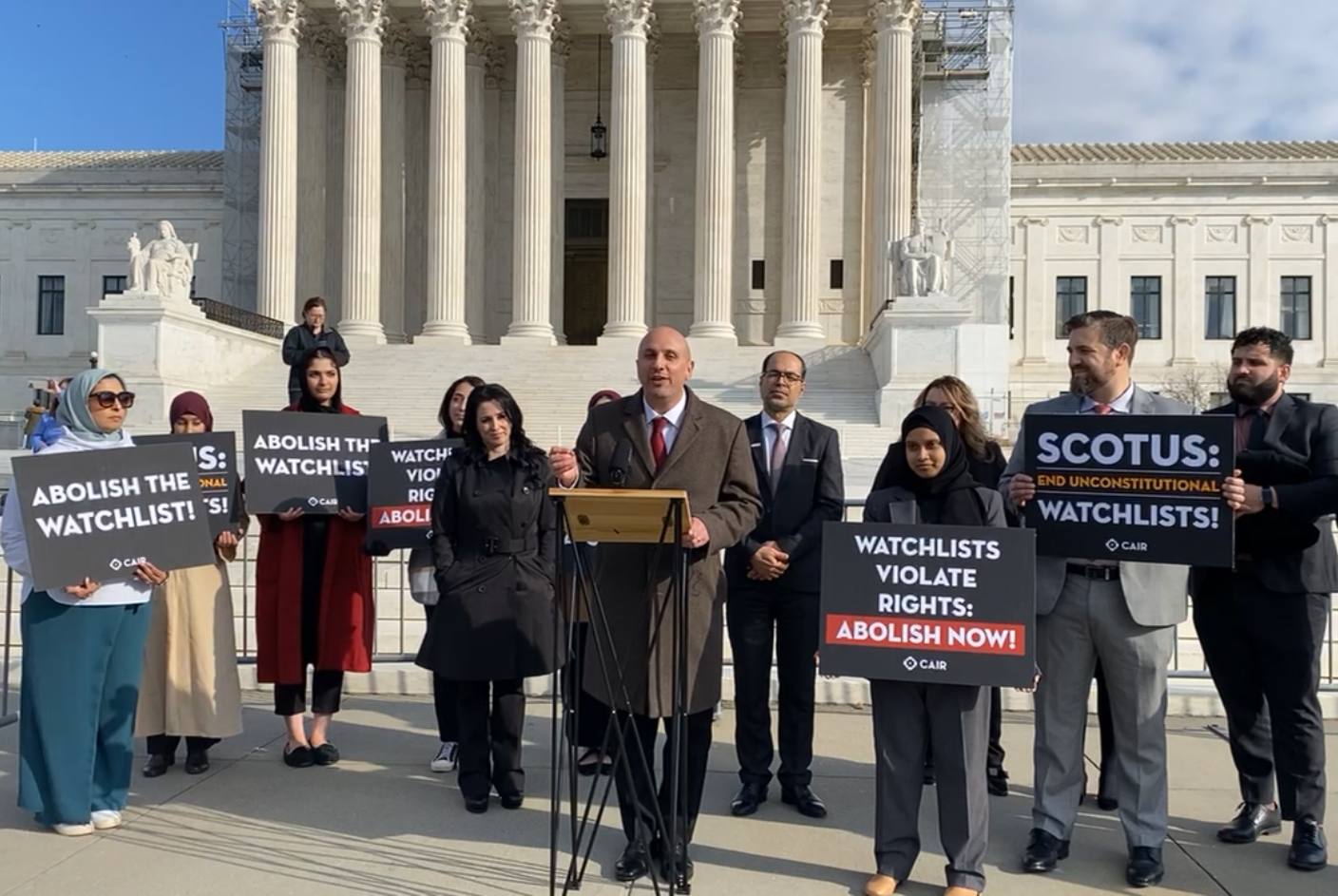
Gadeir Abbas, the lawyer for the Council on American Islamic Relations (CAIR) who argued Mr. Fikre’s case before the Supreme Court, said after today’s decision was announced, “The FBI cannot place innocent Muslims on the No Fly List, only to then block that unconstitutional list from scrutiny by removing those Muslims whenever they file a lawsuit.”
We congratulate Mr. Fikre and his lawyers for standing up for all blacklisted Americans. Fifteen years after he was blacklisted by his government and ten years after he filed his lawsuit, Mr. Fikre is still a long way from a trial or a ruling on the merits of his case. Today’s ruling is a step toward justice, but shouldn’t be misunderstood as meaning that “the system works” or that Mr. Fikre has been “given his day in court”.
We wish Mr. Fikre and his lawyers all success on remand in the District Court in Portland.