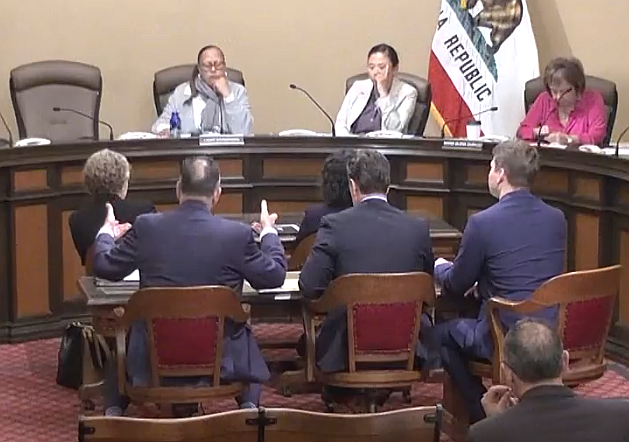
California DMV Director Steve Gordon responds to questions from members of Senate Budget Subcommittee #5 on Transportation, March 19, 2026
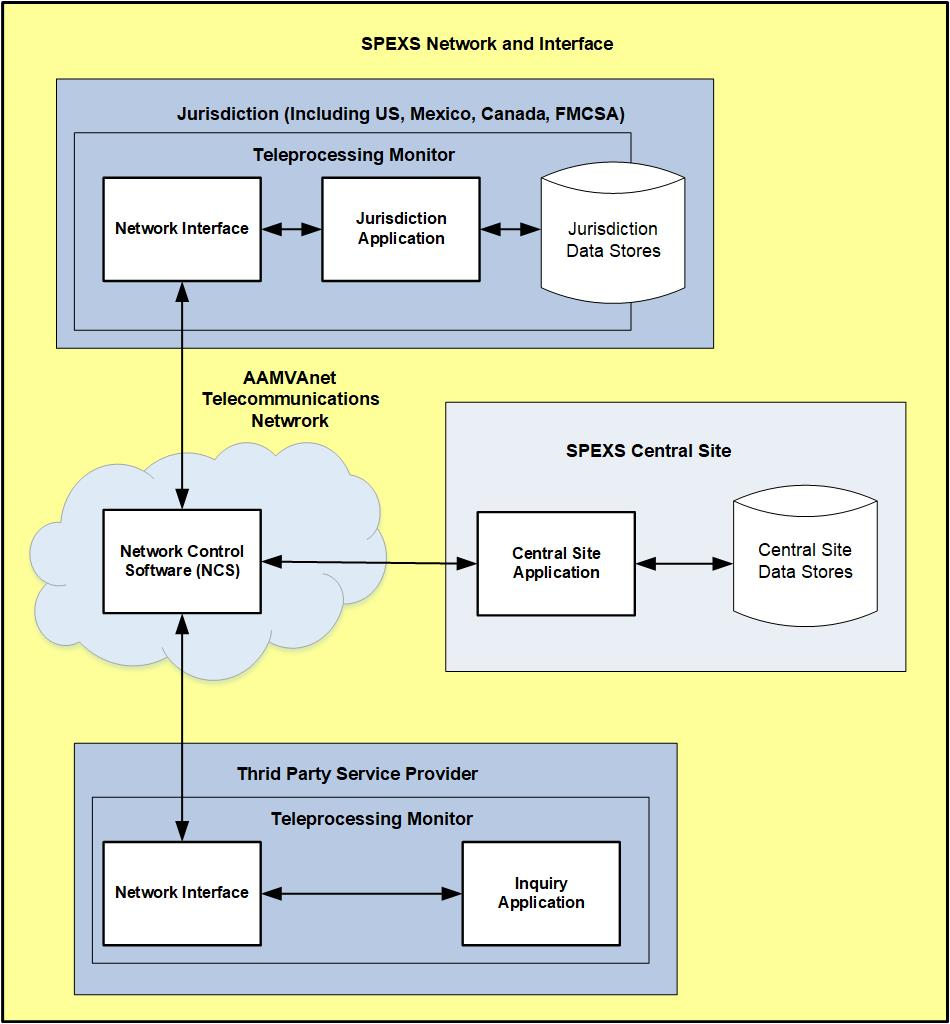
As part of their lobbying of the California legislature to change state law and appropriate $55 million to upload information about all California driver’s licenses and ID state-issued non-driver ID cards to the privately-held SPEXS national ID database, the Department of Motor Vehicles (DMV) and the office of Governor Gavin Newsom have claimed that the state is already “committed” to the planned upload, despite the fact that it would violate current state law restricting disclosure of license and ID records.
The latest responses to our public records requests show that this claim is false.
At a hearing on March 19, 2026, before Senate Budget Subcommittee $5 on Transportation, DMV Director Steve Gordon testified (see video beginning at 1:42:00):
As I mentioned, you know, California has signed an agreement back in 2028 to effectuate, you know, the REAL ID Act and make sure that in fact, that we’re compliant, including State-to-State. So the agreement we have with the Department of Homeland Security, as well as the Transportation Security Administration, is we have a agreed upon date, which is the February [2027] date that you mentioned.
If the DMV Director, the Governor, or some other state official signed such an agreement purporting to commit the state to take actions prohibited by current state law, that raises important questions as to whether they violated their duty to comply with state laws, or whether they took it upon themselves to commit the legislature to change those laws.
After subsequent meetings in which the DMV and the Governor’s office doubled down on their claim that the state is already bound by signed “agreements” with the DHS and TSA, we filed public records requests with the DMV and the Governor’s office to find out who signed those agreements, when, and what the agreements say.
The response from the DMV and the Governor’s office was that they could find no record of any such agreements.
In our public records request, we cited DMV Director Gordon’s testimony and asked for:
…a copy of each agreement referred to by Director Gordon in this testimony, including the names, titles, and organizational or agency affiliations of each of the persons signing the agreement…. This request includes… the agreement(s) signed in 2018 and the agreement(s) that the state of California and/or the DMV currently has with the U.S. Department of Homeland Security and/or Transportation Security Administration regarding the “State-To-State” system, the date of participation by the state of California and/or the DMV in that system, or the February 2027 date referred to by Director
Gordon.
The Office of the Governor told us that it “has no records responsive to your request.” The DMV, after three weeks of delay, told us that it could find no contracts or agreements at all with the TSA, and that the only contracts or agreements with the DHS that it could find were a series of annual contracts for the DMV to pay the DHS per-query fees to use the DHS/USCIS Systematic Alien Verification for Entitlements (SAVE) system to check the citizenship and immigration status of applicants for California driver’s licenses and IDs. The DMV could find no contracts or agreements with the DHS related to the “State-to-State” system.
Assuming these responses to our request for public records to be accurate, there is no agreement form 2018 or more recently with the DHS or TSA committing California to participate in the S2S network or upload any information to the SPEXS database at AAMVA’s central site for S2S, much less any agreement committing the state ot a February 2027 “deadline” for this upload — contrary to DMV Director Gordon’s testimony.
This isn’t a new question or the first time that DMV Director Gordon appears to have lied about REAL-ID Act requirements. In our testimony as the only public witness at a state budget hearing in 2019, we pointed out (see video beginning at 1:10:23) that that the DMV was already making plans that would require this upload, but hadn’t sought funding or authorization from the legislature for it. We also raised many of the other issues that have re-emerged this year when the DMV belatedly sought approval and funding for the upload.
Following that 2019 hearing, DMV Director Gordon admitted to us that he had personally flown without ID and knew that no ID at all is required to fly, despite his personal appearances in DMV videos and “public service announcements” claiming that ID was required and that REAL-ID would be required to fly.
Neither California legislators nor the public should trust the DMV on this issue, especially when the DMV’s Director makes specific claims in official testimony — naming specific parties, dates, and details — of which the DMV can find no record.
As we said at this Monday’s hearing before the full Senate Budget Committee (see video starting at 2:48:22) once the DMV uploads information about all California driver’s licenses and IDs to AAMVA (which holds the SPEXS database), the “guardrails” in this bill would do nothing to protect Californians against the threat that Federal or other states’ law enforcement agencies could obtain an order (1) requiring AAMVA to hand over this data in bulk and (2) prohibiting AAMVA from disclosing that order to the DMV or to the Californians — especially vulnerable immigrant and transgender Californians — against whom this data will be weaponized.
This is a major policy question that shouldn’t be be bundled into the budget. There’s no urgency and no legal deadline — only a date picked by AAMVA for AAMVA’s convenience. There’s no reason not to remove this proposal form this year’s budget and budget trailer bill so that it can be given full and deliberate consideration by the appropriate policy committees of the legislature.
There’s an alternative: As we’ve been telling the DMV and the legislature for years, instread of premature capitulation to DHS threats, California should be working through its Attorney General to prepare to defend Californians against any attempt by the DHS and/or TSA to carry out their lawless threats to interfere with state residents’ right to travel if the state chooses not to comply with the REAL-ID Act.