DHS demands AAMVA’s national commercial driver database
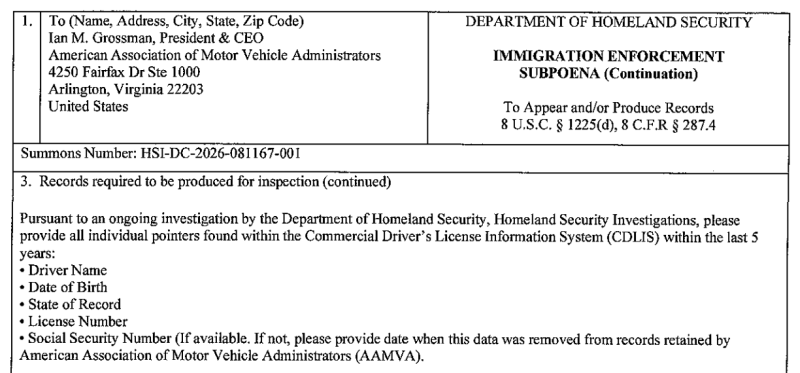
The US Department of Homeland Security (DHS) has subpoenaed the American Association of Motor Vehicle Administrators (AAMVA) for a copy of all entries in the CDLIS national database of state-issued commercial driver’s licenses held by AAMVA. The administrative subpoena was issued August 11th and ordered AAMVA to hand over a copy of all records that were found in the CDLIS database any time in the last five years, by 8 am Monday, August 17th.
DOT says that “AAMVA operates the CDLIS database on behalf of the federal government; it is contractually and legally obligated to furnish the requested records at FMCSA’s direction.”
In response, a group of states led by Illinois has filed separate lawsuits in Virginia, where AAMVA is incorporated, against the DHS to quash the subpoena and against AAMVA and the US Department of Transportation (DOT) to enjoin AAMVA from complying with the DOT’s parallel demand for the same data.
US District Judge Anthony Trenga immediately issued temporary stays which prohibit AAMVA from complying with the subpoena and prohibit any actions by DOT to punish AAMVA for noncompliance with the DHS subpoena or DOT demand for CDLIS data. Initial hearings before Judge Trenga in both cases are scheduled for Thursday, August 20th.
We hate to have to say, “We told you so.” But in this case, we told you so.
The CDLIS database is the little brother for commercial driver’s licenses (for truckers) to the big brother SPEXS database for all driver’s licenses and state-issued ID cards. Like SPEXS, CDLIS is a national database of “pointer” records (including name, date of birth, state, license or ID number, and Social Security Number) aggregated from information uploaded by state motor vehicle agencies but held by AAMVA or AAMVA’s contractors.
CDLIS (commercial license) and S2S (non-commercial license) pointer records are all stored in the same SPEXS database as part of AAMVA’s central site:
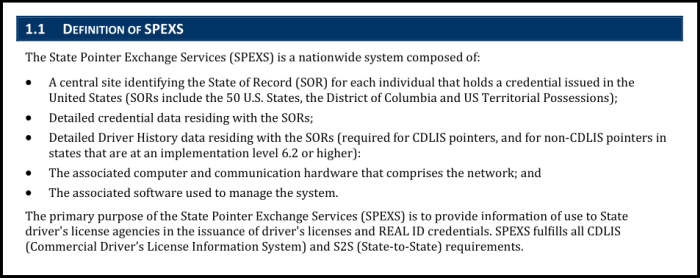
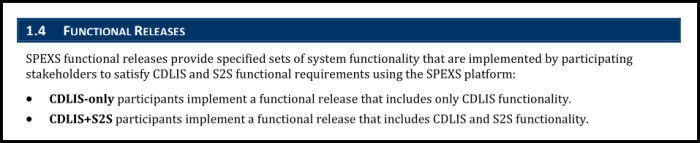
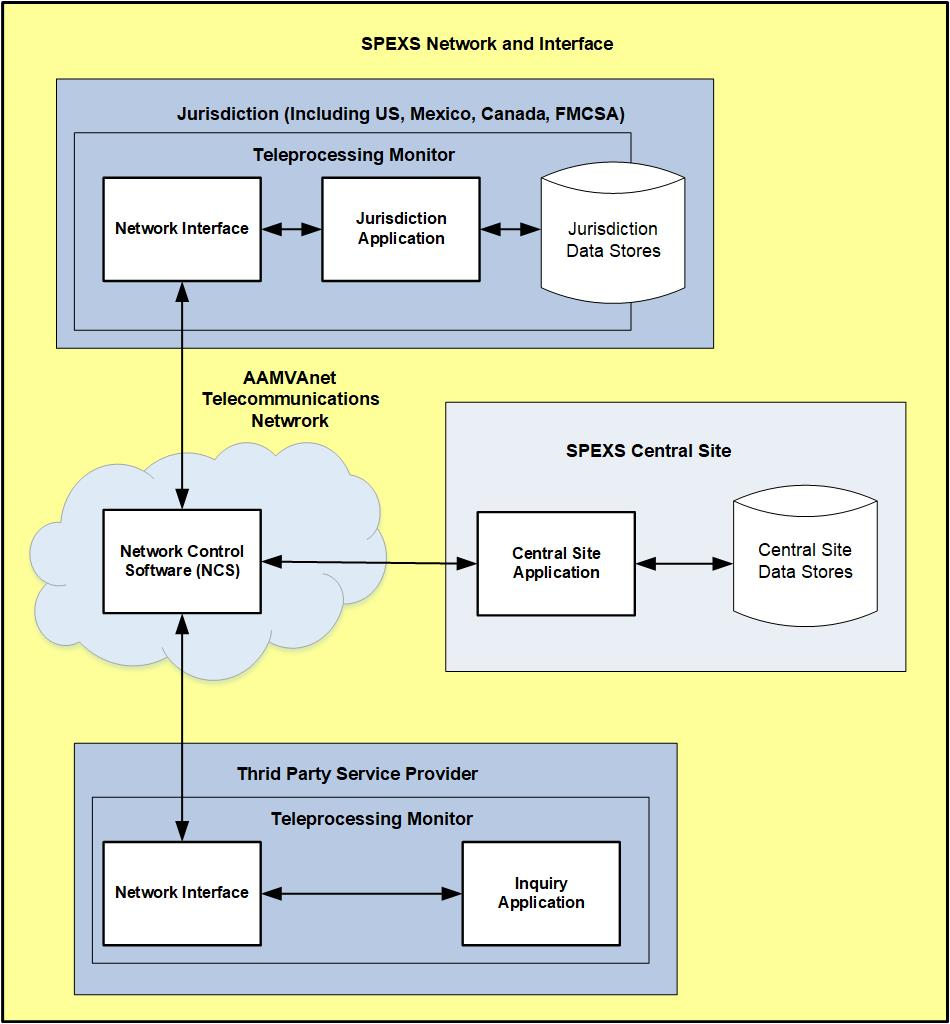 [Excerpts from AAMVA’s “SPEXS System Specification”]
We’ve warned repeatedly that once data is uploaded to AAMVA’s SPEXS database, Federal agencies could demand it from AAMVA in bulk. State authorities, most recently in California, have brushed off our warnings. But as conceded in declarations from the California Department of Motor Vehicles in one of the new cases, the California DMV has already been uploading CDLIS information about commercial driver’s licenses to SPEXS, and plans to start uploading “S2S” data about all California license to SPEXS in 2027.
The DHS is now seeking to obtain driver’s license data from every state, in bulk, through an administrative subpoena to AAMVA, for use for immigration enforcement, in exactly the manner and for the purpose we predicted and warned about.
AAMVA’s role is noteworthy and contemptible, although unsurprising.
AAMVA was sent a demand for the entirety of the CDLIS database on June 25th, but didn’t tell the states that had uploaded the data in question about the Federal demand until almost a month later on July 23rd. State can’t count on prompt notice from AAMVA.
Even now, AAMVA isn’t challenging the demand for CDLIS data. AAMVA is a defendant, along with the Federal agencies, in the lawsuits brought by states to protect their residents’ data against bulk disclosure to Federal agencies for immigration enforcement.
According to the complaints, the DHS and DOT have threatened to cut off all Federal funding for AAMVA, including funding for CDLIS itself (and presumably also SPEXS), if AAMVA doesn’t hand over the requested data. AAMVA depends on Federal funding, so it can’t afford to challenge Federal demands, making it in effect a captive proxy for the Feds despite being a nominally non-governmental private nonprofit corporation.
Presumably, the Feds will learn from AAMVA’s failure to challenge their demands for the data it holds. Next time, they’ll come back with a subpoena that includes a gag order prohibiting AAMVA from disclosing the subpoena to states that uploaded the data, so states will have no chance to file lawsuits like the ones filed this week.
The obvious next step after that would be a similar demand for SPEXS data about ordinary non-commercial licenses, probably as soon as California completes its planned bulk upload to SPEXS sometime early in 2027.
Officials in California and other states can no longer claim this isn’t possible.
State legislators need to act, now, to withdraw their states from SPEXS, before the DHS expands its data demands from the commercial licenses in CDLIS to all licenses in SPEXS.
Pingback: 国土安全部要求AAMVA的全国商业司机数据库 - 偏执的码农
It’s an administrative subpoena!
That’s just a request, not a binding order.
Bet there’s no grounds for a judicial subpoena…
There is actually a non-disclosure “request:. It’s in small print. “You are requested not to disclose the existence of this summons for an indefinite period of time. Any such disclosure will impede the investigation and thereby interfere with the enforcement of federal law”. While it is true that it is an administrative subpoena, the states are having to go to court to stop AAMVA from fulfilling it, and the hammer is the threat to terminate all federal grants and contracts to AAMVA if they do not comply, which would likely be the end of AAMVA.
Following initial briefing and an initial hearing, Judge Trenga granted a temporary restraining order in the case against AAMVA, prohibiting AAMVA, prohibiting AAMVA from providing DOT with a bulk dump of CDLIS data while the case proceeds: https://storage.courtlistener.com/recap/gov.uscourts.vaed.603338/gov.uscourts.vaed.603338.54.0.pdf
On September 1, 2026, the American Federation of Teachers moved to intervene on behalf of AFT members (including school bus drivers represented by AFT in some districts) whose commercial driver’s license data is included in CDLIS. AFT says that states have their own interests, including retaining Federal funding, and can’t be relied on to represent the interests of individuals whose data is at risk:
https://storage.courtlistener.com/recap/gov.uscourts.vaed.603338/gov.uscourts.vaed.603338.91.2.pdf
“As California debated sharing data on drivers, Homeland Security subpoenaed 17 million records” (by Wendy Fry and Khari Johnson, Cal Matters, September 3, 2026): https://calmatters.org/economy/technology/2026/09/driver-license-database-subpoena/
“AAMVA’s behavior with respect to these commercial driver’s licenses gives California compelling reasons not to trust AAMVA to safeguard the much larger number of non-commercial driver’s license records that the DMV plans to upload to AAMVA next year,” said Ed Hasbrouck of the civil liberties group The Identity Project.
“Why Trump’s demand for trucker records sets off CA privacy alarms” (by Lynn La, Cal Matters, September 3, 2026):
https://calmatters.org/newsletter/driver-license-database-trucker/
“We told you so.”
That’s what privacy and immigrant advocates are saying about a federal subpoena to a national clearinghouse of DMV records. This summer, they tried to warn Gov. Gavin Newsom that sharing data about California driver’s license holders could put noncitizens at risk.
As CalMatters’ Wendy Fry and Khari Johnson explain, Newsom’s office, the California DMV and state authorities earlier this summer confirmed plans to share driver data to a multistate verification system run by the nonprofit American Association of Motor Vehicle Administrators, or AAMVA. Advocates denounced the move, raising alarm that it could put undocumented Californians in jeopardy of deportation if federal agencies get ahold of the information.
Ten days after the governor signed the bill that enabled data sharing, the California DMV learned on July 23 that the U.S. Department of Homeland Security had demanded data from AAMVA on 17 million people with commercial driver’s licenses, including their names, birthdays and Social Security numbers.
Less than a month later, the federal department escalated its demands by subpoenaing AAMVA.
Ed Hasbrouck of the civil liberties group The Identity Project: “We hate to have to say, ‘We told you so.’ But in this case, we told you so.”
Pingback: Court bars AAMVA from giving away driver’s license data — for now – Papers, Please!