CBP wants all visitors to install and use its smartphone app
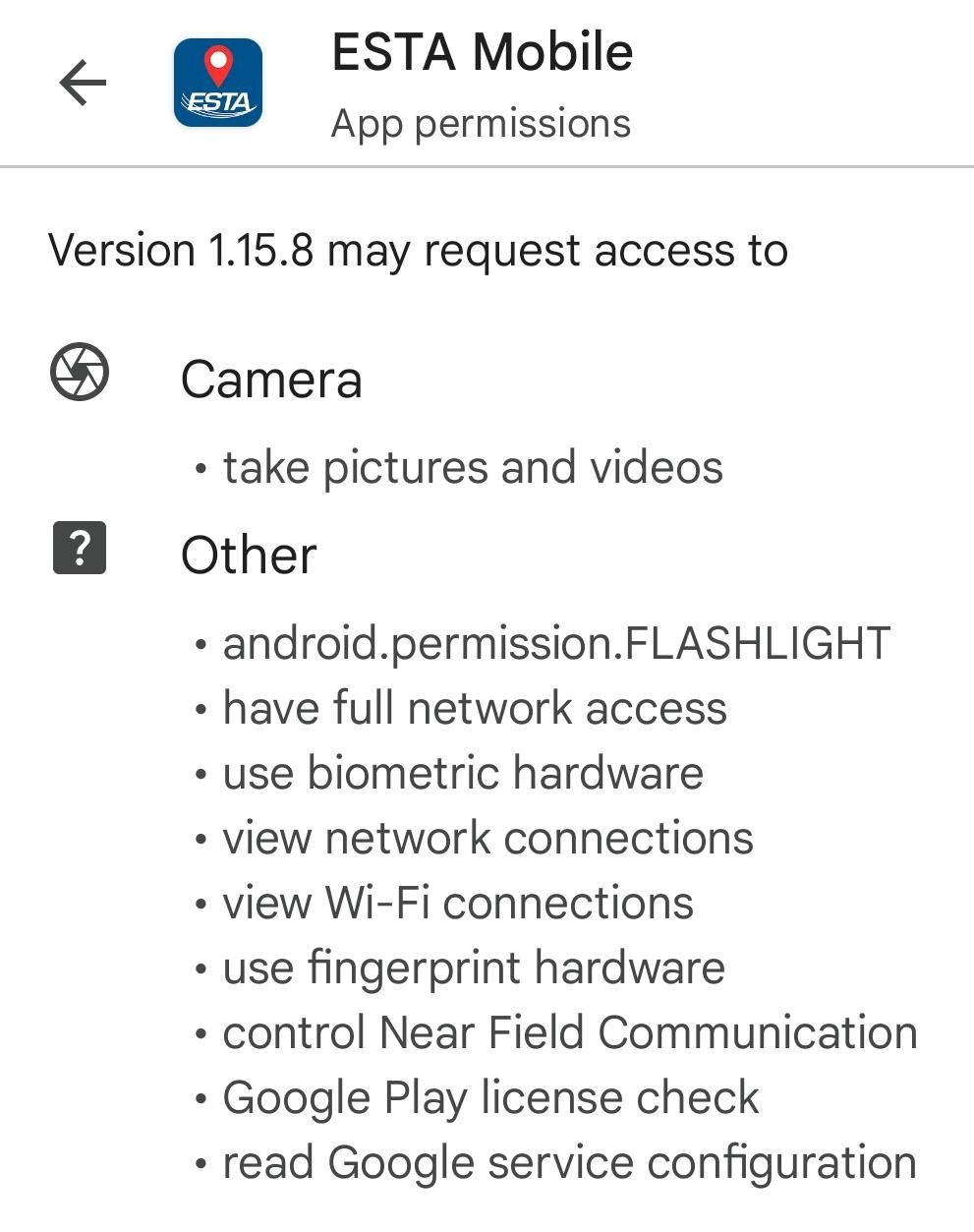
[Permissions requested by ESTA Android app. Why does CBP want to be able control your flashlight?]
Each visitor to the US under the Visa Waiver Program (VWP), for which the fee has recently been raised from $21 to $40 per person, would be required to submit, in advance, through this smartphone app, identifiers for all social media accounts they have used in the last five years.
Each visitor would also be required to submit what CBP calls “High Value Data Elements”. According to the notice:
The high value data fields include:
a. Telephone numbers used in the last five years;
b. Email addresses used in the last ten years;
c. IP addresses and metadata from electronically submitted photos;
d. Family member names (parents, spouse, siblings, children);
e. Family number telephone numbers used in the last five years;
f. Family member dates of birth;
g. Family member places of birth;
h. Family member residencies;
i. Biometrics—face, fingerprint, DNA, and iris;
j. Business telephone numbers used in the last five years;
k. Business email addresses used in the last ten years.
CBP thinks that the average visitor could compile and enter all of this data (typing on a smartphone) in 22 minutes, including the time needed to contact each of their siblings and children to find out their five-year history of addresses and phone numbers.
Welcome to the 2026 World Cup!
Applicants for US visas are already required to provide a much more extensive set of personal data, including biometrics and identifiers for all social media accounts they have used. So this proposal, if approved, would expand collection of biometrics, social media identifiers, and the additional “high value data elements” to almost all foreign visitors to the US, with or without visas. The only remaining exception, which CBP doesn’t mention, is for asylum seekers who may have no documents and who require no pre-approval.
We continue to oppose warrantlesss, suspicionless compelled disclosure of social media or biometric identifiers or other information as unconstitutional and a violation of the human rights of travelers. And we oppose any requirement to provide this information in advance, when it could be collected on arrival in the US, when visitors apply for admission.